For preschools, early learning centers, and childcare facilities, outdoor time is part of the daily schedule, not an occasional recess. Toddlers and young children are outside every day, running, crawling, sitting, and falling on whatever surface is under them. In Florida, that surface also has to handle intense sun, heavy rain, and constant use without becoming a hazard or a maintenance burden for staff.
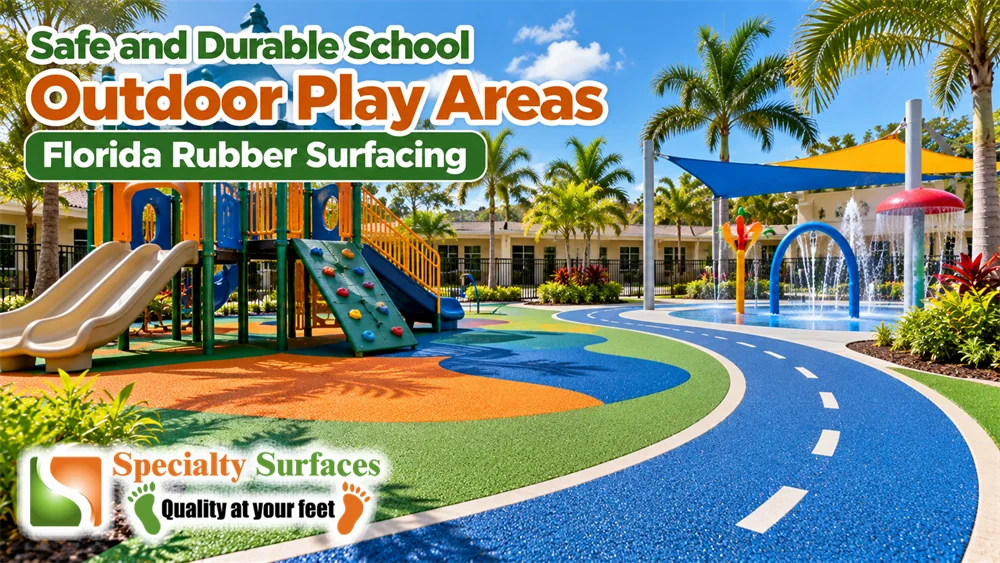
Directors and facility managers face a different challenge than large K-12 campuses. Creating safe and durable school outdoor play areas for younger children means thinking about the entire outdoor space, from the play yard and shade areas to water play zones and the paths children use to get there.
Administrators planning improvements can start with an overview of commercial surfacing solutions for Florida schools, childcare centers, and recreation facilities.
Key Takeaways
- Young children use outdoor areas every day, so surfaces must stay safe through constant wear.
- Poured-in-place rubber cushions falls and can be specified for the fall height of each piece of equipment.
- Seamless surfaces remove loose fill that can be scattered, tracked indoors, or swallowed.
- Separate systems are designed for dry play yards and for wet splash or water play zones.
- Durable, low-maintenance surfaces free staff time for supervision rather than upkeep.
Why Younger Children Need a Different Approach
Preschool and childcare play areas serve children who are still developing balance and coordination. They fall more often, they spend more time at ground level, and they explore surfaces with their hands. A play yard that works for older students may not be the right fit for two- to five-year-olds.
Poured-in-place rubber provides a cushioned, continuous surface that can be installed at the thickness required for the fall height of the equipment it surrounds, in line with applicable playground safety standards. Directors can review playground safety surfacing for early learning centers and community play spaces to see how systems are specified.
Looking Beyond the Play Structure
The area directly under climbing equipment is only one part of a childcare outdoor space. Children also gather in shaded sitting areas, ride tricycles along paths, play in open zones, and line up at doors and gates. Each of these surfaces affects how safely and comfortably children move through the day.
Planning safe and durable school outdoor play areas as one connected space helps eliminate trip edges between materials and makes the whole yard easier to supervise. For larger elementary campuses and equipment-focused projects, administrators can read Florida School Playground Rubber Surfacing for Safer Play Areas.
Replacing Loose Fill With a Seamless Surface
Many childcare centers start with mulch, sand, or loose rubber chips. These materials scatter quickly, need regular raking and topping off to stay effective, and end up tracked into classrooms. Small pieces can also become a concern with very young children.
A seamless poured surface stays in place, does not need to be raked back under equipment, and gives staff a consistent surface to inspect. It also provides a firmer, more accessible route for children and adults using mobility aids. A summary of safety, accessibility, and upkeep benefits of seamless play surfacing explains how these systems compare with loose fill.
Water Play and Splash Areas
Many Florida childcare programs add water tables, sprinklers, or small splash features for hot days. These areas stay wet and need surfaces built specifically for continuous water exposure, with good traction and drainage.
Wet-area systems are different from dry play yard systems, and using the right one in each location helps both perform as intended. Facilities adding water features can review splash pad surfacing engineered for wet, high-traction play zones.
Choosing Materials for Florida Conditions
Florida sun and heat are hard on outdoor materials. UV-stable rubber granules help surfaces hold their color, and porous systems allow rain to drain through so the play yard is usable sooner after a storm.
PebbleFlex® is designed for dry play areas with vibrant, long-lasting color, TPV offers a wide color range at an economical price point, and AquaFlex® is engineered for wet zones. Colors and simple graphics such as paths, hopscotch patterns, or play zones can also support learning activities. Facility teams can compare PebbleFlex®, TPV, and AquaFlex® options for dry play yards and water play zones.
When these choices are made together, safe and durable school outdoor play areas can stay attractive and functional through years of daily use.
Case Example
A Florida early learning center had a play yard surfaced with mulch that had thinned under the climbing structure, spread onto walkways, and was regularly tracked into classrooms. Staff spent time raking and topping it off every week.
The center replaced the mulch with a seamless poured-in-place rubber surface sized to the equipment fall height, added a colorful tricycle path, and installed a wet-area system around a small water play feature. Teachers gained a cleaner, more consistent play space, and maintenance shifted from weekly raking to routine sweeping and inspection.
Frequently Asked Questions About Childcare and Preschool Play Surfacing
1. What surfacing works best for preschool play areas?
Poured-in-place rubber is a popular choice because it cushions falls, stays in place, and provides a continuous surface. The system and thickness are selected based on equipment and use.
2. How thick does playground rubber surfacing need to be?
Thickness is specified based on the fall height of the equipment it surrounds. Installers follow applicable playground safety standards when setting depth.
3. Is poured rubber better than mulch for young children?
Poured rubber does not scatter, track indoors, or need regular raking. It also provides a firmer, more accessible surface for children and adults.
4. Can rubber surfacing be accessible for children with disabilities?
Yes. Seamless poured surfaces can provide a firm, stable route for wheelchairs and mobility aids when designed for accessibility.
5. Can the play yard and splash area use the same surface?
Wet and dry areas usually need different systems. Wet-area products are designed for constant water exposure and traction.
6. Does rubber surfacing get hot in the Florida sun?
All outdoor surfaces absorb heat in direct sun. Lighter color choices and shade structures help keep play areas more comfortable.
7. How do staff maintain a poured rubber play surface?
Routine sweeping or blowing and occasional cleaning are usually enough. Periodic inspection helps catch wear at high-traffic spots.
8. Can colors and designs be added to the surface?
Yes. Paths, shapes, and play patterns can be built into the surface to support movement and learning activities.
9. Can surfacing be installed over an existing play area?
Often, yes. The existing base is evaluated, loose fill is removed, and the area is prepared before installation.
10. Why is professional installation important for childcare play areas?
Correct thickness, base preparation, drainage, and edge details all affect safety and durability. Experienced installers manage these factors to specification.
Specialty Surfaces: Safer Play Spaces for Florida Schools and Childcare Centers
For more than 17 years, Specialty Surfaces has installed play and recreation surfacing for schools, HOAs, resorts, and major Florida destinations including Disney, Universal, and Hilton properties, with a focus on safety, drainage, and durability.
Specialty Surfaces is the exclusive authorized Florida installer of AquaFlex® and PebbleFlex® poured-in-place rubber surfacing and helps facilities choose the right system for each zone of an outdoor space. Learn more about Specialty Surfaces’ experience with play and recreation projects across Florida.
Build a Play Space That Works as Hard as Your Staff
Young children deserve outdoor areas that are cushioned, clean, and ready to use every day. Investing in safe and durable school outdoor play areas helps preschools and childcare centers reduce daily upkeep while giving children more confident, active play time.
Directors comparing approaches can also explore poured rubber surface systems used in Florida play and recreation spaces.
Request Your Free Quote Today
If your play yard relies on worn mulch, cracked concrete, or aging surfacing, Specialty Surfaces can evaluate the space and recommend a system sized for your equipment and children.
Request a personalized consultation and your no-obligation free quote today.