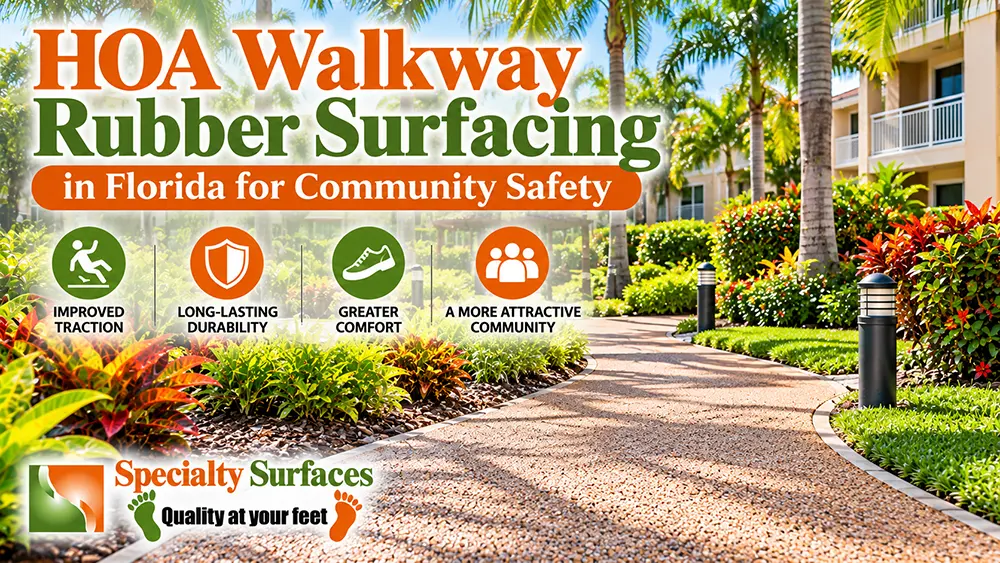
Walkways connect nearly every part of an HOA community. Residents and guests use them to reach homes, clubhouses, pools, mail areas, recreational amenities, parking areas, and other shared spaces. Because these pedestrian routes are used every day, their condition can directly affect both the appearance and usability of the property.
Florida communities also face demanding environmental conditions. Heat, intense sunlight, heavy rain, humidity, and year-round foot traffic can contribute to deterioration of traditional walkway surfaces over time. HOA walkway rubber surfacing in Florida provides boards and property managers with a resilient option for improving heavily traveled pedestrian areas while supporting safety, durability, and a well-maintained community appearance.
HOA decision-makers evaluating common-area improvements can explore commercial rubber surfacing solutions for Florida communities and shared-use properties when considering upgrades throughout the property.
Key Takeaways
- Walkways are high-use common areas that affect safety, accessibility, and community appearance.
- Textured rubber surfacing can improve traction in pedestrian areas exposed to rain and moisture.
- Resilient surfacing provides greater underfoot comfort than many rigid materials.
- Seamless systems can refresh worn or deteriorating common-area walkways.
- Decorative colors and blends can complement community architecture and landscaping.
- Professional installation supports proper substrate preparation, drainage, and long-term performance.
Why HOA Walkways Deserve More Attention
Walkways may not receive the same attention as pools, clubhouses, or other major amenities, but they often experience more consistent daily use. Residents may travel the same routes multiple times each day, while visitors, maintenance personnel, delivery services, and vendors add additional traffic.
As surfaces age, cracks, uneven areas, worn finishes, staining, and other deterioration can make pedestrian routes less attractive and potentially more difficult to navigate.
HOA boards and property managers can explore rubber surfacing options for HOA and condominium common areas throughout Florida when planning improvements to frequently used community spaces.
Wet Florida Conditions Make Traction Important
Heavy rainfall can quickly leave community walkways wet. Irrigation systems, pool traffic, landscaping runoff, and shaded areas that dry slowly can create additional moisture throughout a property.
A textured rubber surface can provide improved traction under wet conditions while creating a resilient walking surface for residents and guests.
For communities considering HOA walkway rubber surfacing in Florida, the objective is not simply to replace an aging surface. It is to create pedestrian areas that better support the way residents actually move through the property every day.
Connecting Community Amenities
HOA walkways frequently create the physical connection between a community’s most important shared amenities. A resident might travel from a condominium building to the clubhouse, continue to the pool, and then use another walkway to reach recreational or landscaped areas.
When these routes use inconsistent, patched, or deteriorating materials, the property can appear fragmented even when individual amenities are well maintained.
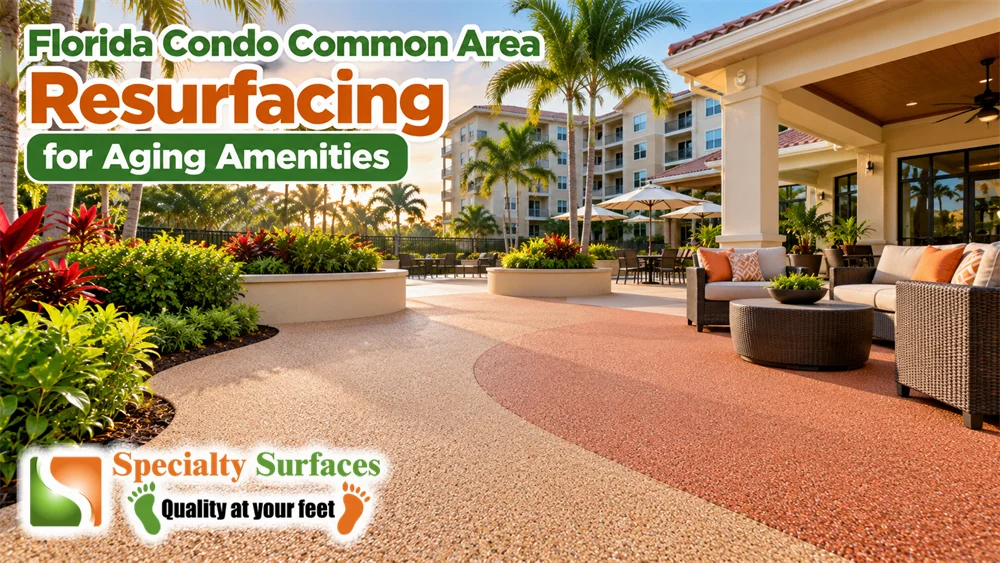
Professionally installed rubber surfacing can help create more cohesive pedestrian areas while providing a decorative finish that complements buildings, landscaping, pools, and other community features.
Property managers considering broader common-area improvements can learn more about rubber surfacing solutions for high-traffic HOA and condominium common areas when evaluating surfaces across the property.
Choosing Materials for Different Community Conditions
Not every walkway experiences the same level of moisture or exposure. A pathway near a pool may regularly become wet, while a covered route between buildings may remain relatively dry. Other walkways may be exposed to direct sunlight and rainfall throughout the day.
Specialty Surfaces installs AquaFlex® and PebbleFlex® systems for different wet and dry applications. Selecting the appropriate material depends on the specific environment, substrate, traffic, drainage, and intended use.
HOA boards and property managers can compare AquaFlex® and PebbleFlex® materials for wet and dry commercial community applications when evaluating systems for different areas of a property.
Supporting Community Appearance and Property Maintenance
Common-area surfaces contribute to residents’ perception of how well their community is maintained. Worn, patched, stained, or deteriorating walkways can detract from otherwise attractive landscaping and amenities.
Rubber surfacing provides an opportunity to address performance and appearance within the same improvement project. Decorative colors and blends can coordinate with community architecture while a seamless finish helps create a cleaner, more consistent appearance.
For HOA boards balancing maintenance priorities with long-term community standards, improving heavily used pedestrian routes can be a practical investment in both daily usability and the overall presentation of the property.
Long-Term Performance for Community Walkways
HOA walkways must withstand continuous pedestrian traffic, outdoor debris, landscaping activity, moisture, cleaning, and Florida weather. When a surface requires frequent patching or repair, maintenance demands can increase while the community continues to deal with an inconsistent appearance.
Professionally installed rubber surfacing provides a resilient, seamless finish designed for demanding outdoor applications. Routine cleaning and periodic inspection can help property teams maintain the surface and identify areas requiring attention.
HOA boards comparing improvement options can explore the safety, durability, comfort, and maintenance benefits of commercial rubber surfacing when evaluating long-term solutions for common areas.
Professional Installation Is Essential for Walkway Performance
Successful resurfacing begins with the condition of the existing substrate. Before installation, experienced professionals evaluate the walkway for cracks, deterioration, drainage concerns, previous coatings, and other conditions that could affect adhesion or performance.
Necessary repairs and surface preparation are completed before the selected system is applied according to manufacturer specifications. Particular attention must also be given to transitions, edges, drainage, and connections with adjoining surfaces.
For communities investing in HOA walkway rubber surfacing in Florida, professional preparation and installation help ensure that the completed surface is appropriate for the property’s environmental conditions and daily pedestrian use.
Community decision-makers can also explore rubber surfacing designed for residential and commercial walkways in Florida when evaluating pedestrian surfacing applications.
Case Example
A Florida HOA had heavily traveled walkways connecting residential buildings with the community’s clubhouse, pool, and recreational amenities. Years of outdoor exposure and routine use had left portions of the existing surface worn, stained, and visually inconsistent.
After the walkways were evaluated and properly prepared, a professionally installed rubber surfacing system created a more cohesive pedestrian route with a resilient, textured finish. The improvement addressed both the appearance of the common areas and the community’s need for surfaces appropriate for frequent pedestrian use.
The project illustrates how walkway resurfacing can become part of a broader common-area improvement strategy rather than simply another recurring repair.
Frequently Asked Questions About HOA Walkway Rubber Surfacing
1. Why should an HOA consider rubber surfacing for community walkways?
Rubber surfacing combines traction, resilience, durability, and decorative flexibility for frequently used pedestrian areas.
2. Can rubber surfacing improve traction on wet community walkways?
Yes. Textured rubber surfacing can improve traction in pedestrian areas exposed to rain, irrigation, pool traffic, and other moisture.
3. Can rubber surfacing be installed over existing concrete walkways?
In many cases, yes. The existing substrate must first be evaluated, repaired where necessary, and properly prepared.
4. Is rubber walkway surfacing comfortable for residents?
Its resilient surface provides greater underfoot comfort than many rigid materials used for community pedestrian routes.
5. Can HOA walkway colors coordinate with the community?
Yes. Decorative colors and blends can complement buildings, landscaping, pools, clubhouses, and other common-area features.
6. Is rubber walkway surfacing difficult to maintain?
Routine removal of debris, periodic cleaning, and regular inspections generally help maintain appearance and performance.
7. Which rubber surfacing system is appropriate for an HOA walkway?
The appropriate system depends on moisture exposure, drainage, substrate conditions, traffic, location, and intended use.
8. Can different systems be used throughout the same HOA property?
Yes. Wet and dry areas may have different requirements, so the appropriate surfacing system can be selected for each application.
9. Can walkway resurfacing improve the appearance of older common areas?
Yes. A seamless decorative finish can refresh worn pedestrian areas and create greater visual consistency throughout the property.
10. Why is professional installation important for HOA walkways?
Professional installation addresses substrate preparation, repairs, drainage, transitions, adhesion, and application requirements.
Specialty Surfaces: Commercial Surfacing for Florida Communities
For more than 17 years, Specialty Surfaces has installed premium surfacing systems for HOAs, condominiums, resorts, recreational facilities, and other commercial properties throughout Florida.
As the exclusive Florida installer of AquaFlex® and PebbleFlex®, Specialty Surfaces can recommend systems based on each property’s environmental conditions, traffic, intended use, and design objectives.
HOA boards and property managers can learn more about Specialty Surfaces’ experience improving high-use surfaces throughout Florida communities.
Improve the Walkways Residents Use Every Day
Walkways are among the most frequently used common areas in an HOA community. Improving them can address deteriorating surfaces while supporting traction, comfort, appearance, and a more cohesive environment throughout the property.
HOA walkway rubber surfacing in Florida provides boards and property managers with a resilient option for upgrading pedestrian routes that connect residents with the amenities and shared spaces they use every day.
Decision-makers researching community improvements can also explore decorative rubber surface systems for safer high-traffic Florida properties when comparing surfacing options.
Request Your Free Quote Today
If your community is dealing with aging, worn, or deteriorating walkways, Specialty Surfaces can evaluate the existing conditions and help determine the appropriate surfacing system for your property.
Request a personalized consultation and your no-obligation free quote today.