The entryway is the first part of a home that guests touch, and it is often the first surface to show its age. In Naples, front steps and entry paths face intense sun, sudden afternoon downpours, sprinkler overspray, and sand tracked in from the beach. Over time, plain or painted concrete can crack, stain, fade, and become slick when wet, which is a poor combination for the spot where everyone arrives with their hands full.
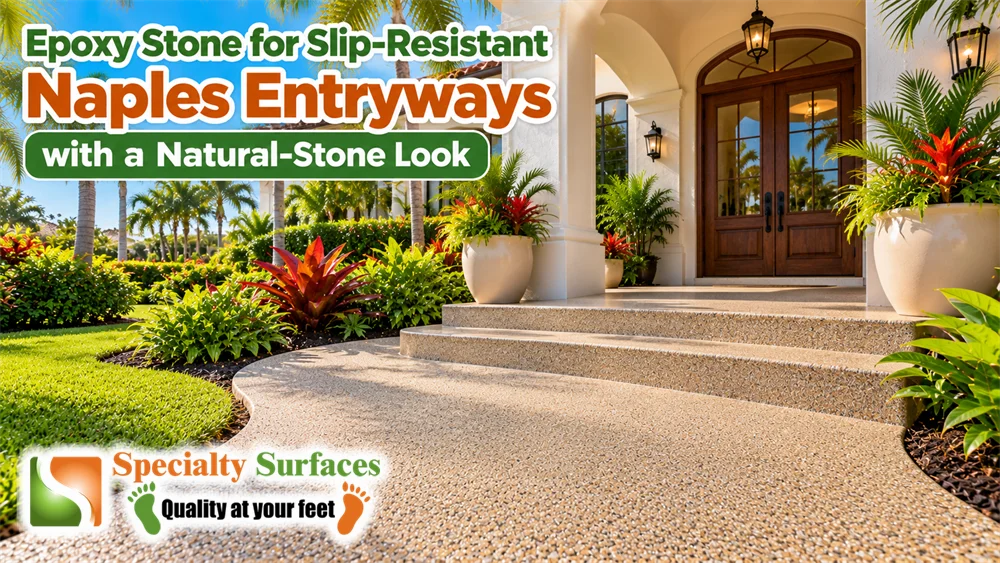
Many homeowners want a safer surface but do not want to give up the look of natural stone. Choosing epoxy stone for slip-resistant Naples entryways offers a way to get both: a seamless river-rock finish with real texture underfoot, installed over most existing concrete without tearing out the original entry.
Homeowners comparing exterior upgrades can start with an overview of decorative surfacing options for Naples, Fort Myers, and Cape Coral homes to see where an entryway fits into a broader plan.
Key Takeaways
- Epoxy stone binds decorative river pebbles in clear resin to create a seamless natural-stone appearance.
- The pebble texture adds traction compared with smooth or painted concrete, especially when the surface is wet.
- Epoxy stone is breathable and can typically be installed over sound existing concrete without demolition.
- Stone color and size can be chosen to complement the home’s architecture, pavers, and landscaping.
- Professional surface preparation is the most important factor in long-term appearance and performance.
Why Naples Entryways Take So Much Wear
A front entry is a small area that works harder than most of the house. It is exposed to direct sun for much of the day, it collects runoff from rooflines and gutters, and it is often the first place irrigation water lands. Every guest, delivery driver, and family member crosses it, usually without looking down.
Smooth concrete and painted coatings are especially vulnerable in these conditions. Paint wears through in traffic paths, sealers can become slippery, and hairline cracks gather dirt that never fully washes out. Once an entry starts looking tired, it can make an otherwise well-kept home feel dated from the street.
Homeowners weighing their choices can review entryway resurfacing systems built for Southwest Florida front steps and porches to understand which materials suit different entry designs.
What Epoxy Stone Is and How It Creates a Natural-Stone Look
Epoxy stone, sometimes called a river rock system, is made by mixing small decorative pebbles with a clear epoxy binder and troweling the blend into a continuous surface. The stones remain fully visible, so the finished entry reads as natural stone rather than a coating.
Because the stones are bound together rather than set individually, the result is seamless. There are no grout lines to stain and no individual pavers to shift or settle. Homeowners can choose blends of tan, cream, gray, white, and darker river rock to match stucco, roof tiles, or existing hardscape.
A closer look at the Epoxy Stone river rock system and other residential surfacing materials shows how it compares with poured rubber options for patios, walkways, and pool areas.
How the Pebble Texture Improves Footing
Slip resistance comes from texture. The rounded tops of the stones create thousands of small contact points under a shoe or bare foot, which gives a more secure feel than a flat, sealed slab. That matters most at the edge of a step, on a slight slope, or in the minutes after a rain shower.
Epoxy stone is also breathable, allowing moisture to move through the surface rather than sitting on top of it. For homeowners considering epoxy stone for slip-resistant Naples entryways, this combination of texture and drainage is one of the main reasons the system is chosen over decorative paint or stamped overlays.
Homeowners interested in the safety side of the decision can read about how textured surfacing supports safer footing, comfort, and lower upkeep across different outdoor areas.
Installing Over Existing Concrete Without Demolition
One of the practical advantages of epoxy stone is that it can typically be applied directly over sound existing concrete. Removing and replacing a front entry is noisy, messy, and can leave a home without a usable entrance for days. Resurfacing avoids most of that disruption.
The existing slab still needs to be evaluated. Cracks are repaired, loose material is removed, and the surface is cleaned and profiled so the new system can bond properly. Steps, edges, and transitions to doors, driveways, and walkways receive extra attention because those are the areas most likely to see impact and wear.
Naples homeowners can see how these projects are approached locally through professional outdoor surface installation for Naples homeowners.
Designing an Entry That Fits the Home
An entryway should feel like part of the architecture, not an afterthought. Lighter stone blends can brighten a shaded porch and keep the surface visually cooler, while warmer or mixed blends can tie a Mediterranean-style facade to surrounding landscape beds and pavers.
The same epoxy stone finish can extend from the front steps onto a connecting walkway or courtyard to create one continuous approach to the door. Planning the full path at once helps avoid mismatched materials and awkward transitions between old and new surfaces.
Homeowners planning a continuous path to the door can look at walkway resurfacing that connects driveways, entries, and garden paths.
Long-Term Care for an Epoxy Stone Entry
Epoxy stone does not require much to keep it looking good. Regular sweeping or blowing removes sand and leaves, and periodic rinsing keeps dirt from settling between the stones. Because there are no joints for weeds to grow through, the surface stays cleaner than many paver entries.
Like any exterior surface in Florida, it benefits from an occasional inspection, especially at edges and steps. Addressing small issues early helps keep the finish consistent. When the system is installed correctly, epoxy stone for slip-resistant Naples entryways can remain an attractive, practical upgrade for years.
Homeowners still deciding between materials can read Entryway Surfacing Materials That Improve Safety and Curb Appeal before choosing a finish.
Case Example
A Naples homeowner had a front entry with painted concrete steps that had faded unevenly and become slick whenever the sprinklers ran. The paint had worn through in the main walking path, and several hairline cracks had darkened with dirt.
After the steps were repaired and prepared, a blended tan and cream epoxy stone finish was installed across the steps and the short walkway to the driveway. The new entry matched the home’s stucco and landscaping, provided more confident footing after rain, and was completed without removing the original concrete.
Frequently Asked Questions About Epoxy Stone Entryways
1. What is epoxy stone?
Epoxy stone is a decorative surface made by binding small river pebbles in a clear epoxy resin. It creates a seamless finish that looks like natural stone.
2. Is epoxy stone slip-resistant?
Yes. The exposed pebble texture provides more traction than smooth or painted concrete, including when the surface is wet.
3. Can epoxy stone be installed over an existing concrete entryway?
In most cases, yes. The concrete must be structurally sound, and cracks and surface issues are repaired and prepared before installation.
4. Does an epoxy stone entry need to be torn out first?
Usually not. Because the system installs over prepared concrete, most entries can be resurfaced without demolition.
5. Does epoxy stone drain water?
Epoxy stone is a breathable system, which allows moisture to move through the surface rather than pooling on top. Proper slope and drainage around the entry still matter.
6. Can I choose the stone color?
Yes. Stone blends are available in a range of natural tones, so the finish can be matched to the home’s exterior, roof, and landscaping.
7. Can epoxy stone be used on front steps?
Yes. Steps and edges receive extra preparation and detailing because they see the most impact and foot traffic.
8. How do I clean an epoxy stone entryway?
Regular sweeping or blowing and occasional rinsing are usually enough. Avoiding harsh chemicals helps protect the finish.
9. Can epoxy stone continue onto a walkway or courtyard?
Yes. Extending the same finish along a connecting path creates a consistent approach and avoids mismatched materials.
10. Why is professional installation important for epoxy stone?
The bond between the system and the concrete depends on correct preparation and mixing. Experienced installers also handle edges, steps, and transitions that affect long-term performance.
Specialty Surfaces: Natural-Looking Entryways for Southwest Florida Homes
For more than 17 years, Specialty Surfaces has helped Florida homeowners upgrade entries, patios, walkways, and pool decks with surfacing systems designed for safety, drainage, and durability in the local climate.
Specialty Surfaces is the exclusive authorized Florida installer of AquaFlex® and PebbleFlex® poured-in-place rubber surfacing and also installs Epoxy Stone, TPV, and Epoxy Flake systems, so each homeowner can choose the right material for the space rather than a one-size-fits-all product. Learn more about the Specialty Surfaces team and its residential installation experience.
Make the First Step Into Your Home the Safest One
An entryway sets the tone for the entire property, and it should feel secure underfoot in every kind of Florida weather. Choosing epoxy stone for slip-resistant Naples entryways gives homeowners a way to replace a worn, slippery entry with a natural-stone look that holds up to daily use.
Homeowners who want to see the full range of finishes available in the region can explore rubber and decorative stone surface systems used across Florida properties.
Request Your Free Quote Today
If your Naples entryway is cracked, faded, or slick after rain, Specialty Surfaces can evaluate the existing concrete and help you choose a stone blend that fits your home.
Request a personalized consultation and your no-obligation free quote today.