
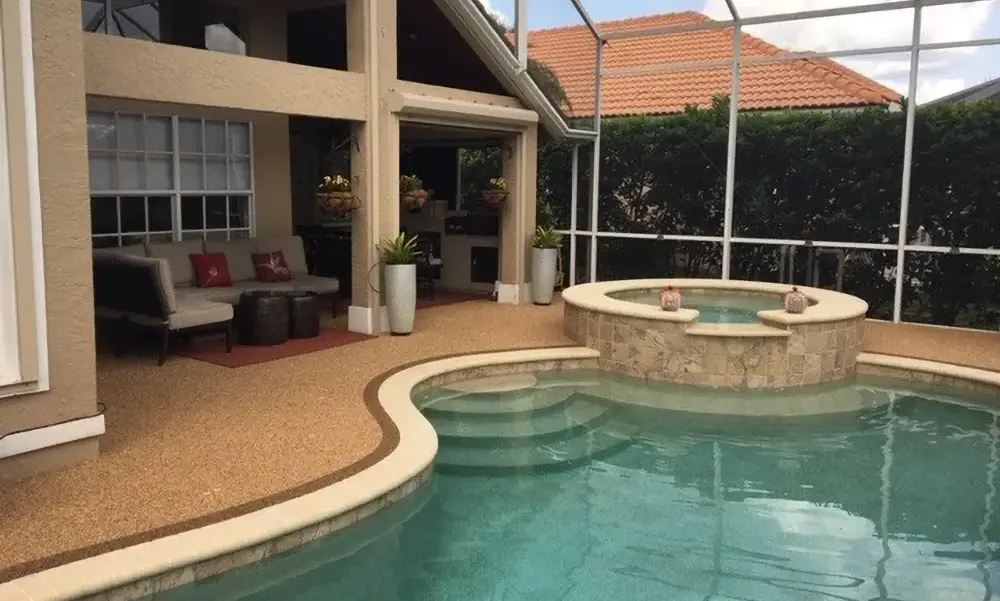
When Pool Deck Wear Turns Into a Bigger Decision
Florida homeowners often face a confusing decision when a pool deck begins to show wear: should the surface be resurfaced, or is it time for a full surfacing system? Cracks, fading, slippery areas, and drainage problems can all signal that action is needed—but the right solution isn’t always obvious.
The difference between pool deck surfacing and resurfacing goes beyond appearance. Each option affects safety, durability, maintenance, and long-term value—especially in Florida’s heat, humidity, and frequent rainfall. Understanding how these approaches work helps homeowners avoid short-term fixes that don’t last.
This article explains the key differences so you can make an informed decision for your pool deck.
The Factors That Actually Matter for Pool Deck Performance
Several factors should guide the decision between surfacing and resurfacing:
- Safety & Slip Resistance
Pool decks must remain safe when wet. Older surfaces often lose traction over time, increasing slip-and-fall risk. - Drainage & Water Exposure
Florida’s rain and pool splash-out demand surfaces that drain effectively. Poor drainage accelerates breakdown and algae growth. - Durability & Lifespan
Cosmetic overlays may look better initially, but can fail under sun, moisture, and foot traffic. - Maintenance Expectations
Some solutions require frequent resealing or patching; others are engineered for long-term performance.
What’s Really Under the Surface: Systems vs Overlays
Resurfacing typically applies a thin overlay or coating over existing concrete. While it can improve appearance temporarily, its longevity depends entirely on the condition of the underlying slab. If the base concrete is compromised, resurfacing often fails prematurely.
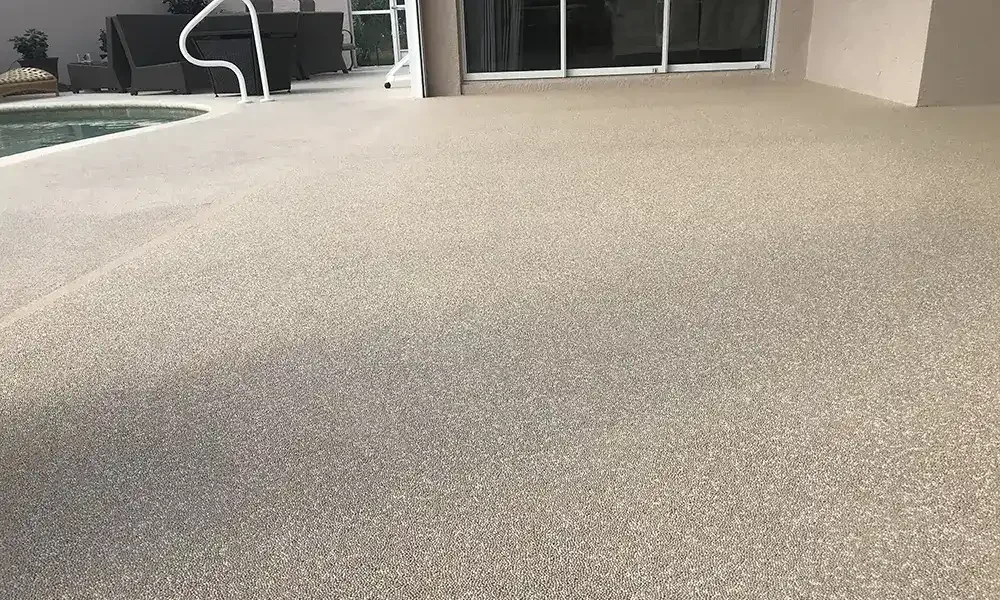
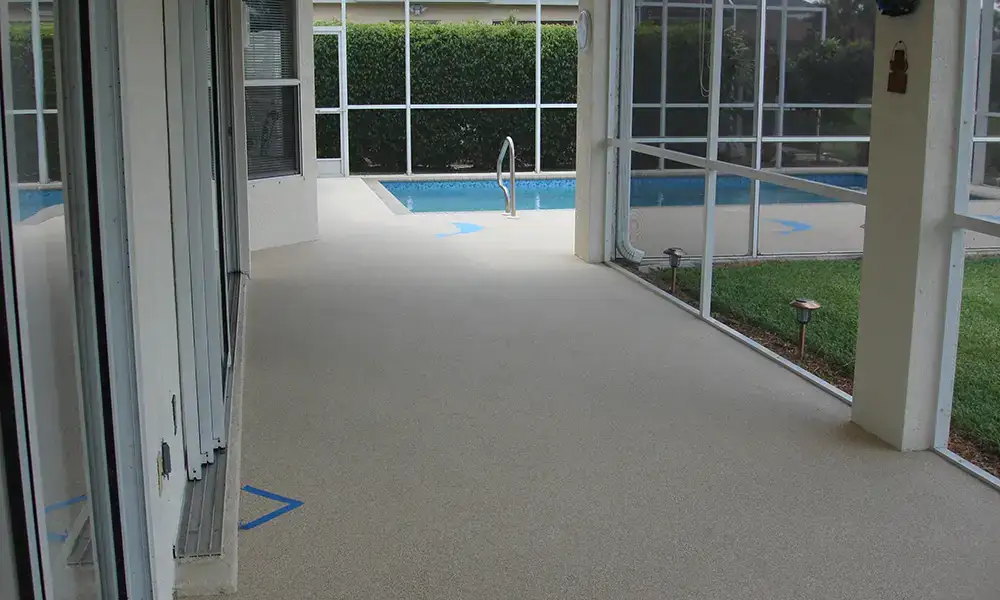
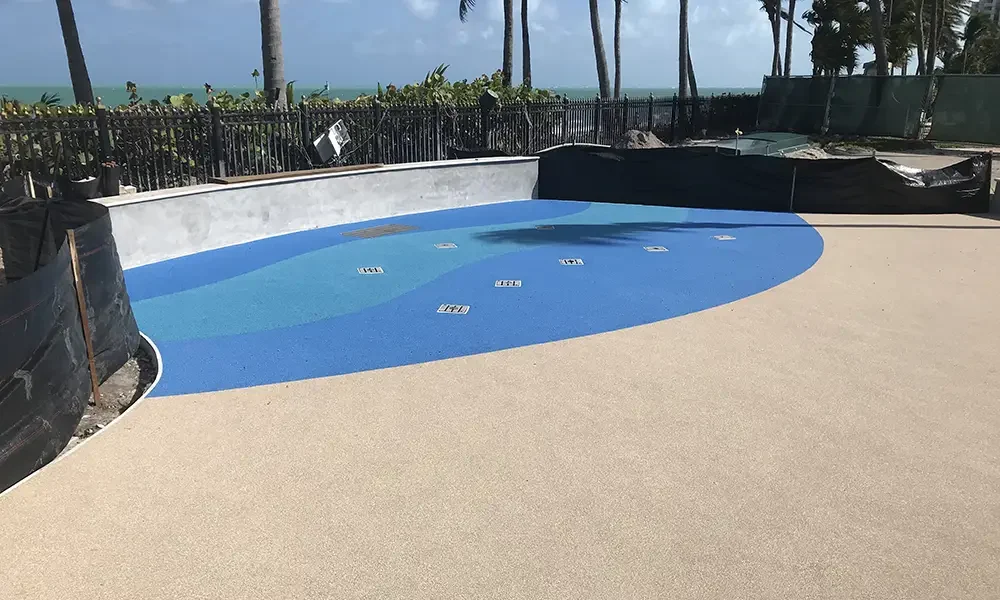
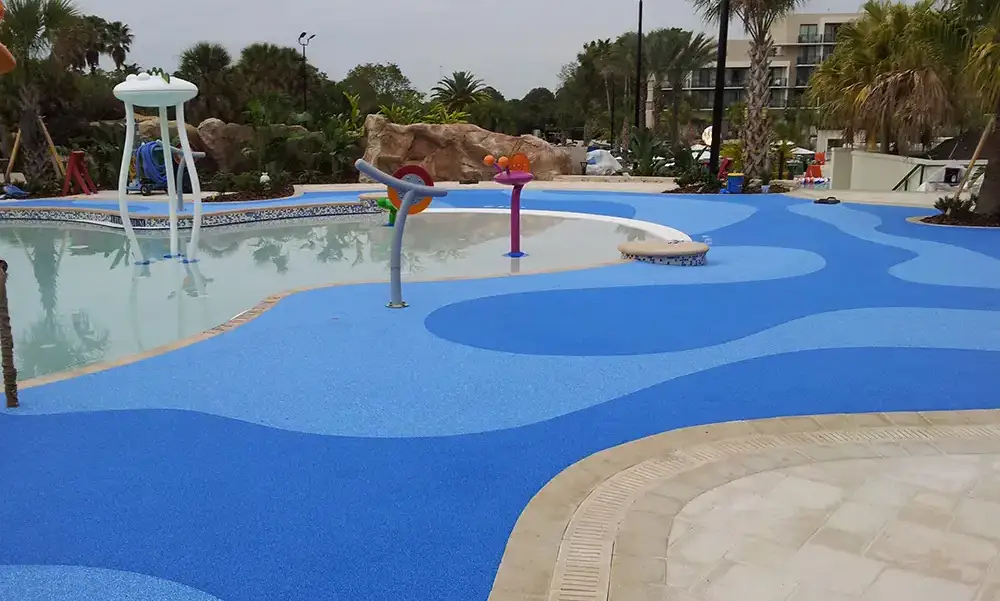
Surfacing systems, by contrast, are engineered solutions designed to perform as a complete system. Poured-in-place rubber and resin-bound systems provide consistent thickness, integrated drainage, and reliable slip resistance throughout the surface—not just at the top layer.
Choosing between these approaches should be based on structural condition, performance needs, and long-term expectations—not aesthetics alone.
How These Choices Affect Everyday Pool Use at Home
For residential pool decks, comfort and safety matter as much as appearance. Homeowners want surfaces that remain cooler underfoot, resist slipping when wet, and stand up to daily use without constant repairs.
Surfacing systems are often better suited for family use and year-round outdoor living because they address traction, drainage, and durability together. Resurfacing may be appropriate only when the existing deck is structurally sound and performance demands are minimal.
When a Professional Evaluation Is the Smart Move
Professional evaluation is critical when cracks recur, water pools on the surface, or previous coatings have failed. Surface professionals assess substrate integrity, slope, moisture exposure, and usage patterns—factors that determine whether resurfacing is viable or if a full surfacing system is the smarter investment.
Skipping this step often leads to repeated repairs and higher long-term costs.
FAQs
What is the difference between pool deck surfacing and resurfacing?
Surfacing installs a performance-based system designed for durability and safety, while resurfacing applies a thin overlay mainly to refresh appearance.
How long does pool deck resurfacing usually last in Florida?
Resurfacing lifespan varies but is often shorter due to heat, moisture, and UV exposure.
Are surfaced pool decks safer than resurfaced ones?
In many cases, yes. Surfacing systems are engineered for consistent slip resistance and drainage.
Can resurfacing fix drainage problems?
No. Drainage issues typically require system-level solutions, not cosmetic overlays.
Is surfacing suitable for older pool decks?
Yes—provided the underlying structure is evaluated and properly prepared.
Do surfaced pool decks stay cooler in the sun?
Many modern systems are designed to reduce heat retention compared to traditional concrete.
How much maintenance does a surfaced pool deck require?
Properly installed systems generally require less maintenance than coated or painted surfaces.
Can resurfacing hide structural damage?
It may conceal issues temporarily, but structural problems often reappear.
Which option adds more long-term value to a home?
Durable surfacing systems typically provide better long-term value and safety.
When should resurfacing be avoided?
When there are recurring cracks, drainage issues, or prior overlay failures.
Why Homeowners Trust Specialty Surfaces
Specialty Surfaces is the only company in Florida exclusively authorized to sell and install AquaFlex® and PebbleFlex® poured-in-place rubber surfacing systems. This exclusive authorization allows Specialty Surfaces to deliver proven safety, durability, and long-term performance for residential and commercial surfacing projects throughout the state.
With more than 17 years in business, Specialty Surfaces brings extensive hands-on experience to residential pool deck projects, helping homeowners choose solutions that prioritize safety, comfort, and long-term performance in Florida’s demanding climate.
Where Residential Services Are Available
Residential surfacing installations are provided in Naples, Fort Myers, and Cape Coral. Commercial surfacing projects are available throughout the state of Florida.
Request a Quote
Get expert guidance on whether resurfacing or installing a new pool deck surface makes the most sense for your home, budget, and safety needs in Florida.

 We value your privacy & would never spam you.