When Pool Deck Performance Becomes a Business Decision
For hotels, resorts, and HOAs, a pool deck isn’t just an amenity—it’s a high-traffic asset that directly affects guest experience, safety, and liability. When surfaces begin to crack, fade, or become slippery, the decision isn’t cosmetic. It’s operational.
Choosing the right commercial pool deck surfacing impacts downtime, maintenance budgets, compliance, and long-term durability. The wrong solution can lead to repeated repairs, safety incidents, and unhappy guests or residents.
This article explains what decision-makers should evaluate when upgrading or replacing commercial pool deck surfaces—and why system-level performance matters.
What Commercial Pool Decks Are Up Against Every Day
Commercial pool environments face demands residential decks simply don’t:
- Constant Foot Traffic
Guests, residents, and staff move across these surfaces all day, accelerating wear. - Water, Chemicals, and UV Exposure
Chlorinated water, sun exposure, and frequent cleaning degrade inferior materials quickly. - Slip-and-Fall Risk
Wet conditions require reliable traction across the entire surface, not just in select areas. - Downtime Constraints
Extended closures impact bookings, resident satisfaction, and revenue.
A commercial solution must address all of these factors simultaneously.
Why System-Based Surfacing Outperforms Coatings and Overlays
Many commercial properties attempt short-term fixes using coatings or thin overlays. While these options may refresh appearance briefly, they rely heavily on the condition of the existing substrate and often fail under heavy use.
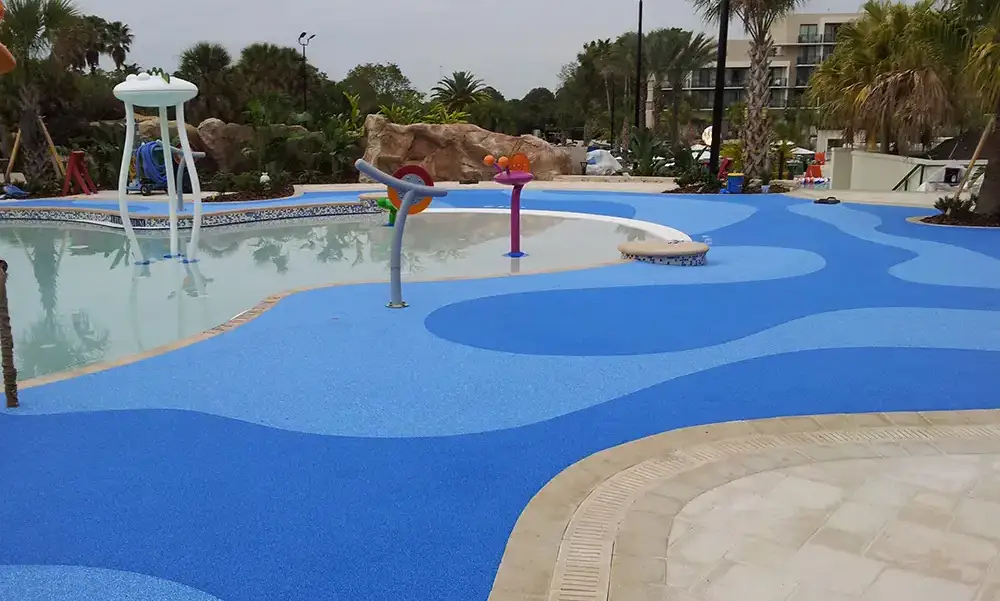
Commercial surfacing systems are engineered as complete solutions. Poured-in-place rubber and resin-bound systems provide consistent thickness, integrated drainage, and uniform slip resistance throughout the surface. Instead of masking problems, these systems are designed to perform under sustained traffic and moisture exposure.
For hotels, resorts, and HOAs, system-based surfacing reduces repeat maintenance and long-term costs.
How Hotels, Resorts, and HOAs Benefit in Practice
In real-world commercial environments, performance translates directly into operational stability:
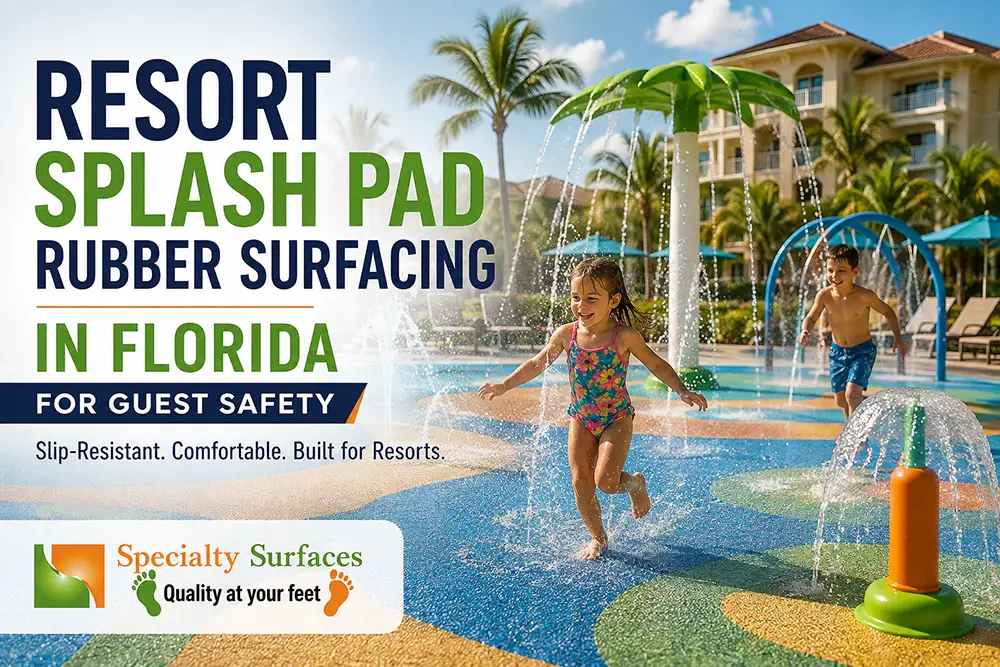
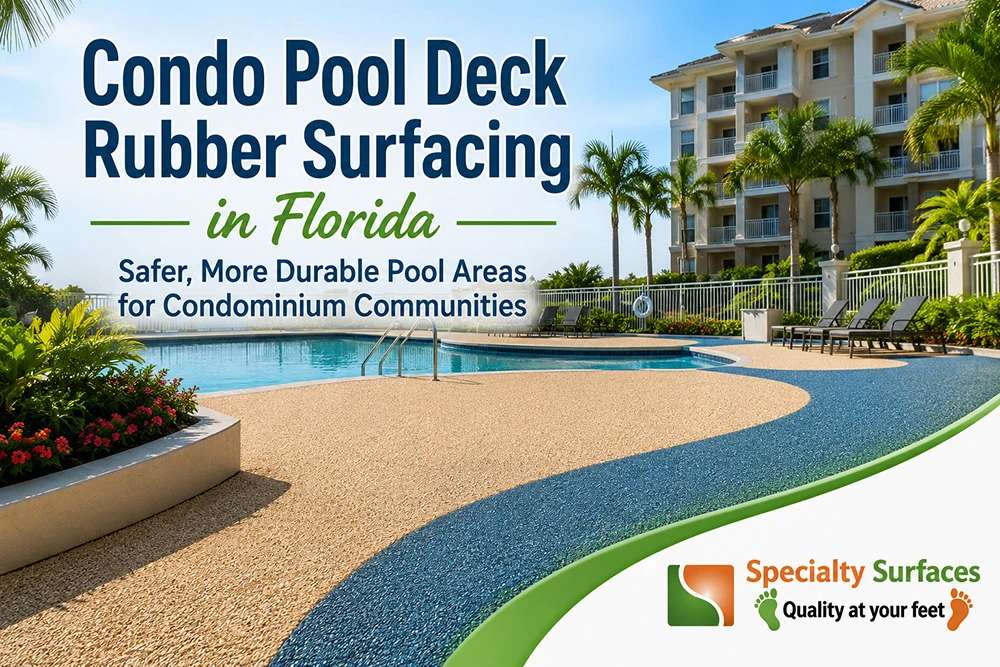
- Hotels and Resorts benefit from safer guest areas, cooler surfaces, and minimal disruption during peak seasons.
- HOAs and Condos gain predictable maintenance schedules and surfaces that hold up under resident use year-round.
- Property Managers reduce liability exposure while improving visual consistency across shared amenities.
Durable surfacing systems support both aesthetics and function—without constant repairs.
When a Professional Assessment Is Essential
Professional evaluation is critical when surfaces show recurring cracks, drainage problems, or coating failures. Specialists assess substrate condition, slope, usage patterns, and exposure levels to determine whether resurfacing is viable or if a full surfacing system is required.
Skipping this step often leads to premature failures and higher long-term costs—especially in commercial settings.
FAQs
What makes commercial pool deck surfacing different from residential systems?
Commercial systems are engineered for higher traffic, stricter safety requirements, and longer service life.
Are commercial pool deck surfaces required to be slip resistant?
Yes. Slip resistance is essential for safety and risk mitigation in public and shared spaces.
How long do commercial surfacing systems typically last?
Lifespan varies by system and usage, but engineered systems significantly outperform coatings and overlays.
Can commercial surfacing be installed over existing concrete?
In many cases, yes—after proper evaluation and preparation of the substrate.
How does surfacing affect pool deck downtime?
System-based installations are designed to minimize closures compared to frequent repairs.
Are these systems suitable for saltwater pools?
Yes. Many commercial systems are designed to withstand saltwater and chemical exposure.
Do commercial pool deck surfaces retain heat?
Modern systems are designed to reduce heat retention compared to traditional concrete.
Is drainage built into commercial surfacing systems?
Yes. Integrated drainage is a key advantage of engineered surfacing solutions.
Can surfacing help reduce long-term maintenance costs?
Yes. Durable systems reduce patching, resealing, and frequent repairs.
When should resurfacing be avoided for commercial decks?
When there are recurring failures, heavy traffic demands, or drainage deficiencies.
Why Commercial Properties Choose Specialty Surfaces
Specialty Surfaces is the only company in Florida exclusively authorized to sell and install AquaFlex® and PebbleFlex® poured-in-place rubber surfacing systems. This exclusive authorization allows Specialty Surfaces to deliver proven safety, durability, and long-term performance for commercial surfacing projects statewide.
With more than 17 years in business, Specialty Surfaces brings deep, real-world experience to high-traffic commercial environments. Their portfolio includes work for hotels, resorts, HOAs, and other shared-use facilities across Florida, where safety, durability, compliance, and minimal downtime are critical. This hands-on experience enables Specialty Surfaces to meet the operational demands of large-scale commercial projects with confidence.
Request a Quote
Talk with our team about durable, slip-resistant pool deck surfacing systems designed for hotels, resorts, and HOA communities across Florida.