In Florida, commercial properties operate under constant pressure. High foot traffic, intense sun exposure, frequent rain, and year-round use take a toll on outdoor surfaces faster than in most states. For property owners and facility managers, worn or unsafe surfaces aren’t just a cosmetic issue—they’re a liability, a maintenance drain, and a signal that infrastructure is falling behind expectations.
From schools and municipal facilities to resorts, hotels, and mixed-use developments, commercial rubber surfacing in Florida has become a practical, forward-thinking solution. It allows organizations to upgrade safety, performance, and appearance without full demolition—while delivering surfaces built specifically for Florida’s demanding conditions.
Where Commercial Properties Feel the Strain First
Across Florida, the same problem areas surface again and again on commercial sites:
- Outdoor walkways and circulation paths with cracking or uneven concrete
- Recreational and activity zones exposed to constant foot traffic
- Pool-adjacent areas where slip risk increases liability
- Courtyards and common spaces that fade, stain, or overheat
- Multi-use outdoor areas that must serve guests, staff, and the public
When these surfaces begin to fail, the consequences escalate quickly:
- Increased slip-and-fall risk
- Higher insurance exposure
- Ongoing patchwork repairs
- Poor first impressions for visitors, tenants, or guests
At scale, reactive maintenance becomes inefficient. Commercial resurfacing shifts the strategy from short-term fixes to long-term performance.
Why Commercial Rubber Surfacing Makes Sense in Florida
Commercial rubber surfacing systems are engineered to outperform traditional concrete and coatings in high-use environments. Instead of fighting Florida’s climate, they’re designed around it.
Property managers and owners choose rubber surfacing because it offers:
- Consistent traction in wet and dry conditions
- Improved comfort underfoot in heat-intensive areas
- Seamless installation with fewer failure points
- Strong resistance to UV exposure and moisture
- Reduced long-term maintenance demands
For commercial properties, this isn’t about aesthetics alone—it’s about risk management, lifecycle cost control, and user experience.
Rubber Surfacing Applications Across Commercial Properties
Commercial rubber surfacing in Florida is adaptable across a wide range of environments, each with different performance requirements.
High-Traffic Outdoor Areas
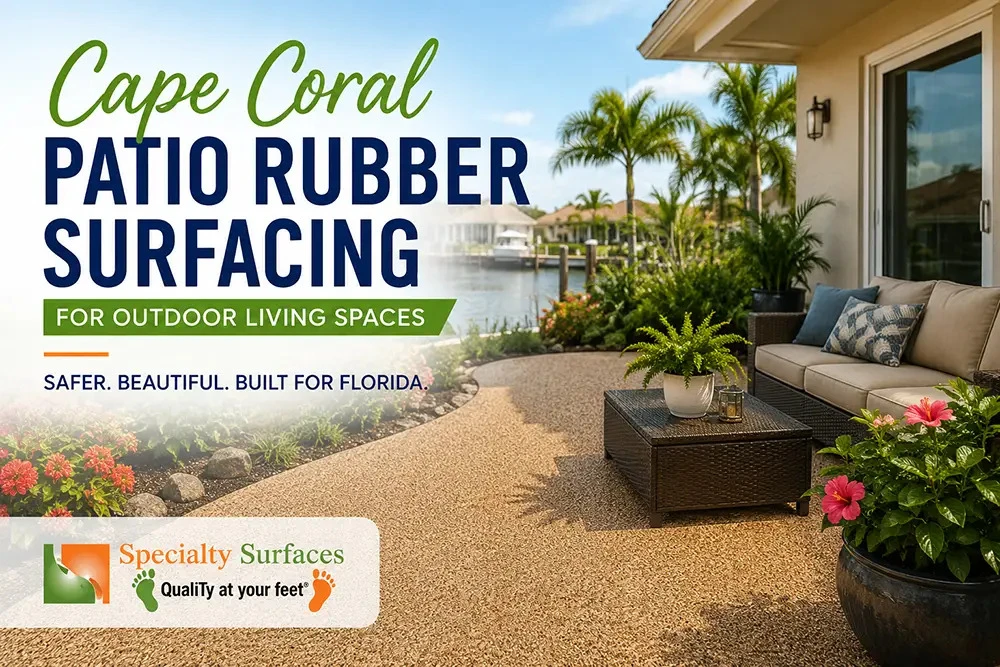
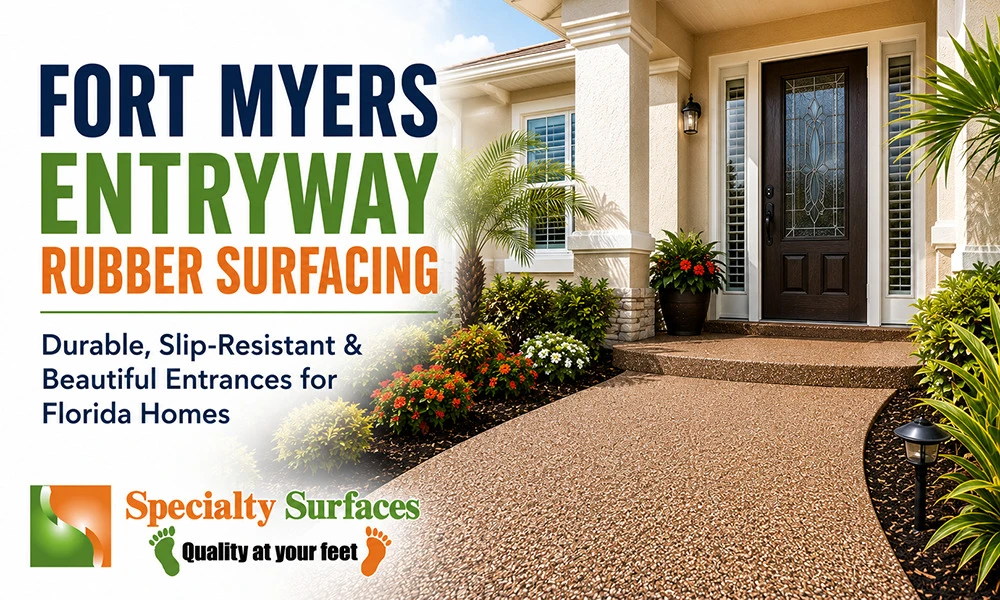
Rubber surfacing systems perform well in courtyards, pedestrian paths, and shared outdoor spaces where constant use quickly degrades traditional concrete.
Pool-Adjacent & Wet Areas
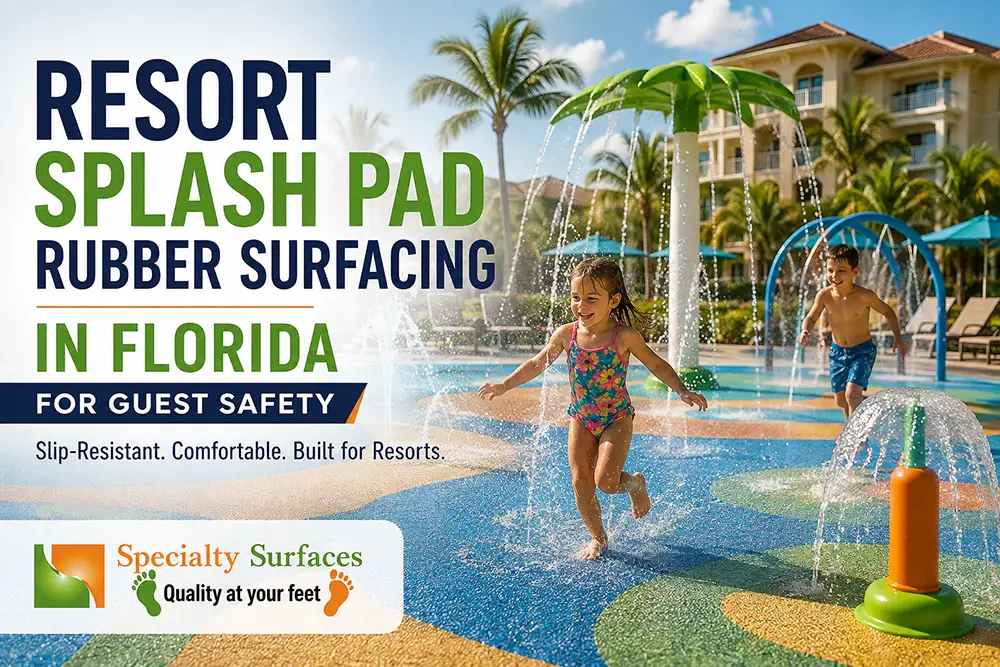
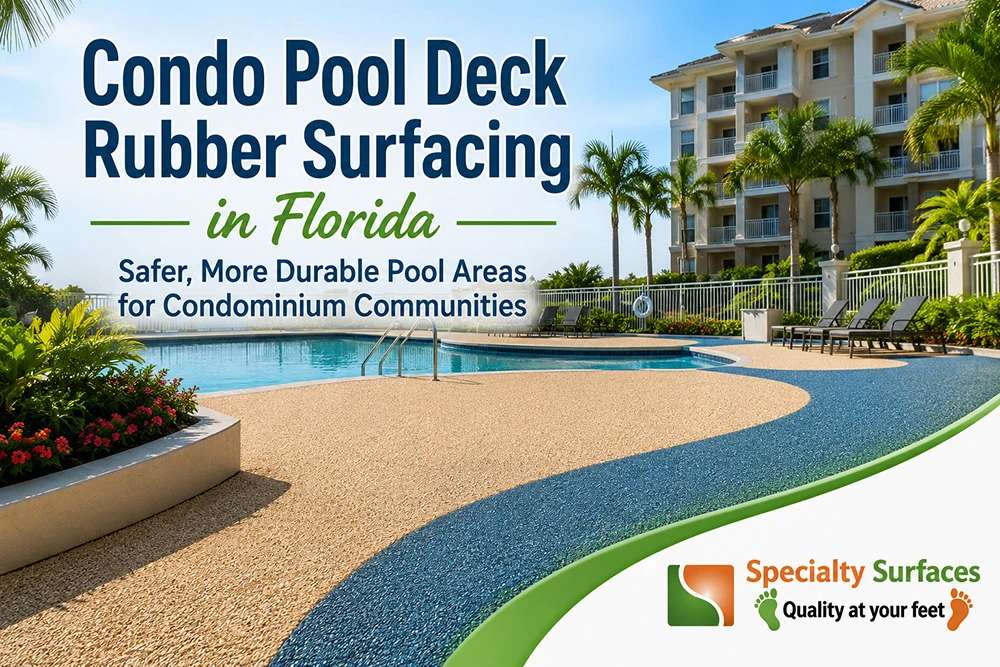
In areas exposed to water, properly engineered rubber systems deliver slip resistance, cooler surface temperatures, and durability under chemical exposure.
Recreational & Activity Zones
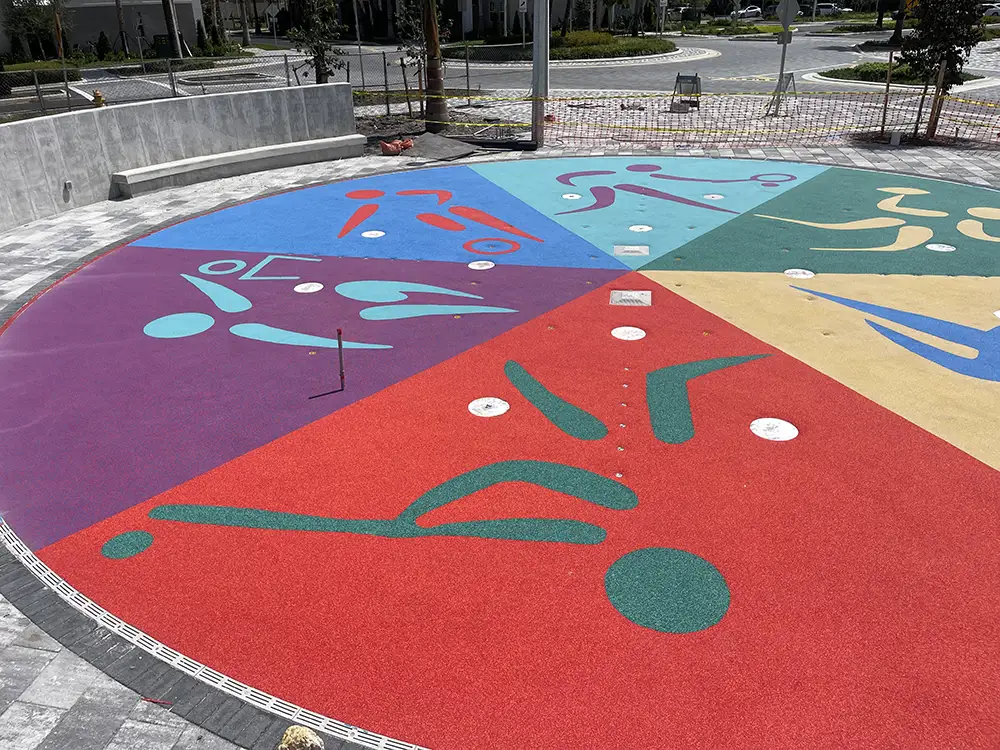
Facilities that include outdoor activity spaces benefit from surfaces that absorb impact, resist wear, and maintain appearance over time.
Institutional & Municipal Properties
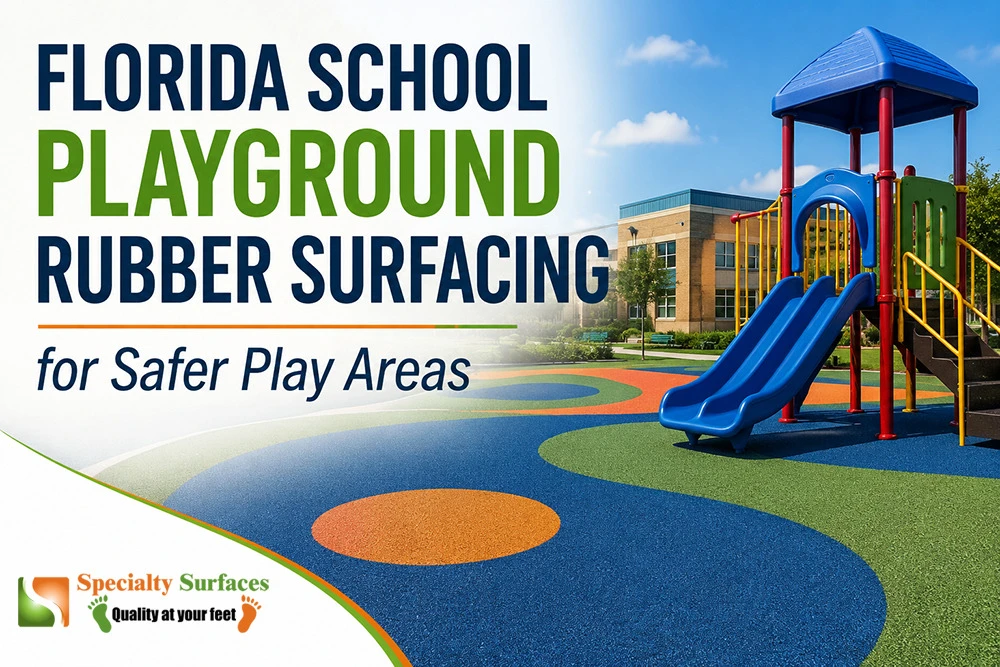
Schools, parks, and public-use facilities require surfaces that balance safety, durability, and ease of maintenance—making rubber surfacing a practical choice.
Each application is selected based on environment, usage level, and performance requirements—not trends.
Long-Term Value for Commercial Decision-Makers
When commercial properties invest in purpose-built rubber surfacing, the returns extend beyond the surface itself:
✔ Risk reduction
Improved traction and surface consistency reduce incident exposure.
✔ Operational efficiency
Less downtime and fewer ongoing repairs.
✔ Professional appearance
Clean, modern surfaces reinforce trust and credibility.
✔ User satisfaction
Guests, staff, and visitors experience safer, more comfortable spaces.
✔ Lifecycle cost control
Surfaces last longer and perform better under heavy use.
For organizations managing multiple properties or large campuses, these benefits scale quickly.
FAQs
What types of commercial properties use rubber surfacing?
Hotels, resorts, schools, municipalities, mixed-use developments, recreation facilities, and institutional properties all benefit from rubber surfacing systems.
Is rubber surfacing suitable for Florida heat and rain?
Yes. These systems are engineered for UV exposure, moisture, and temperature fluctuations common in Florida.
Can rubber surfacing be installed over existing concrete?
In many cases, yes. Proper surface preparation allows resurfacing without full demolition.
How does rubber surfacing compare to coatings or paint?
Rubber systems are thicker, more durable, and designed for performance—not cosmetic coverage.
Does rubber surfacing require high maintenance?
No. It typically reduces maintenance compared to traditional surfaces.
Why Commercial Clients Choose Specialty Surfaces
Specialty Surfaces delivers high-performance commercial rubber surfacing in Florida for properties that demand reliability, safety, and long-term value. Our team works with facility managers, property owners, municipalities, and commercial stakeholders to specify and install systems that match real-world usage—not theoretical specs.
We are the only authorized Florida installer for:
- AquaFlex® Poured-in-Place Rubber Surfacing (wet environments)
- PebbleFlex® Poured-in-Place Rubber Surfacing (dry commercial areas)
We also offer TPV Poured-in-Place Rubber for select dry-use applications where performance and color stability matter.
Commercial clients work with Specialty Surfaces because we provide:
- Systems designed for high-traffic commercial environments
- Certified installation and proven materials
- Clear project coordination and realistic timelines
- A focus on safety, durability, and long-term planning
Request a Commercial Surfacing Consultation
If your commercial property is dealing with worn, unsafe, or outdated outdoor surfaces, now is the time to evaluate a smarter, longer-lasting solution.
Contact Specialty Surfaces today to request a commercial rubber surfacing consultation and take a proactive step toward safer, better-performing outdoor spaces.