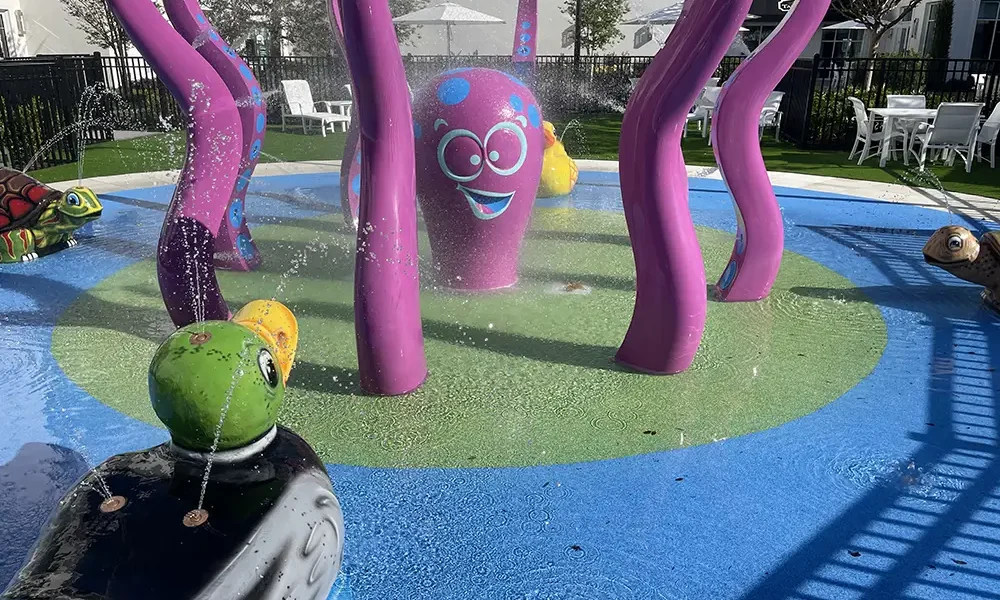
High-traffic common areas are one of the biggest maintenance and liability challenges for HOA and condo communities in Florida. Pool decks, walkways, entryways, courtyards, and shared outdoor spaces are used daily by residents, guests, and service providers—and they must remain safe, durable, and visually consistent year-round.
This article explains what HOA and condo boards should consider when selecting surfacing systems designed to handle constant use, Florida weather, and long-term performance expectations.
Key Takeaways
- HOA and condo surfacing must withstand heavy foot traffic without becoming slippery or uneven.
- Florida moisture, heat, and UV exposure accelerate surface deterioration.
- Safety, drainage, and durability are more important than cosmetic appearance alone.
- Slip resistance is critical for liability reduction in shared community spaces.
- Professional system selection helps avoid premature failure and costly rework.
Why High-Traffic Areas Require Specialized Surfacing
Unlike single-family residential surfaces, HOA and condo common areas experience continuous use. This creates unique challenges:
- Accelerated wear from foot traffic and furniture movement
- Increased exposure to water, sunscreen, and cleaning chemicals
- Higher liability risk due to slips and falls
- Greater visibility—surface failure reflects poorly on property management
Surfaces designed for light residential use often fail prematurely in these environments.
Common Areas That Demand High-Performance Systems
In HOA and condo communities, the most demanding surfacing locations include:
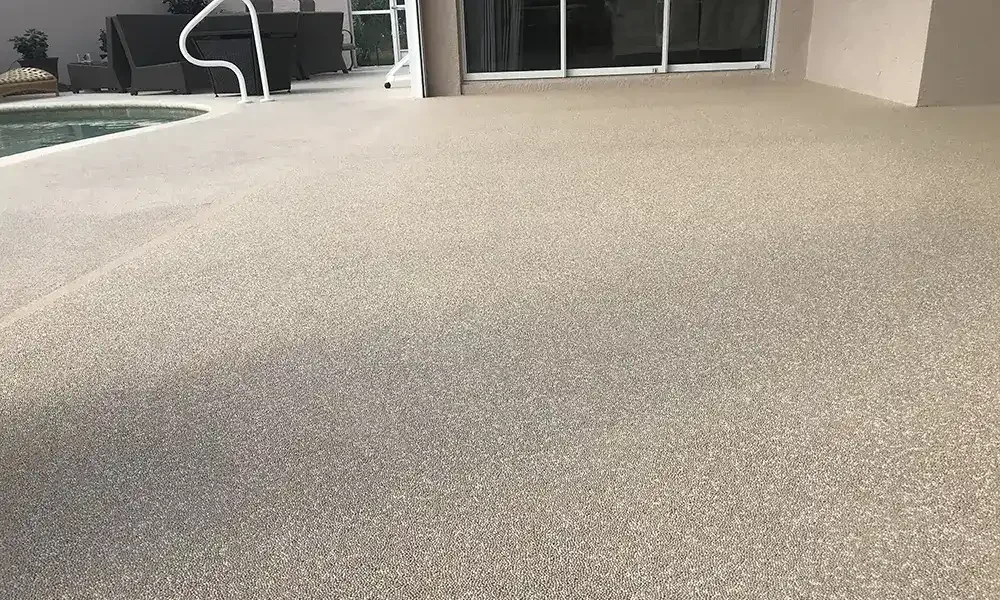
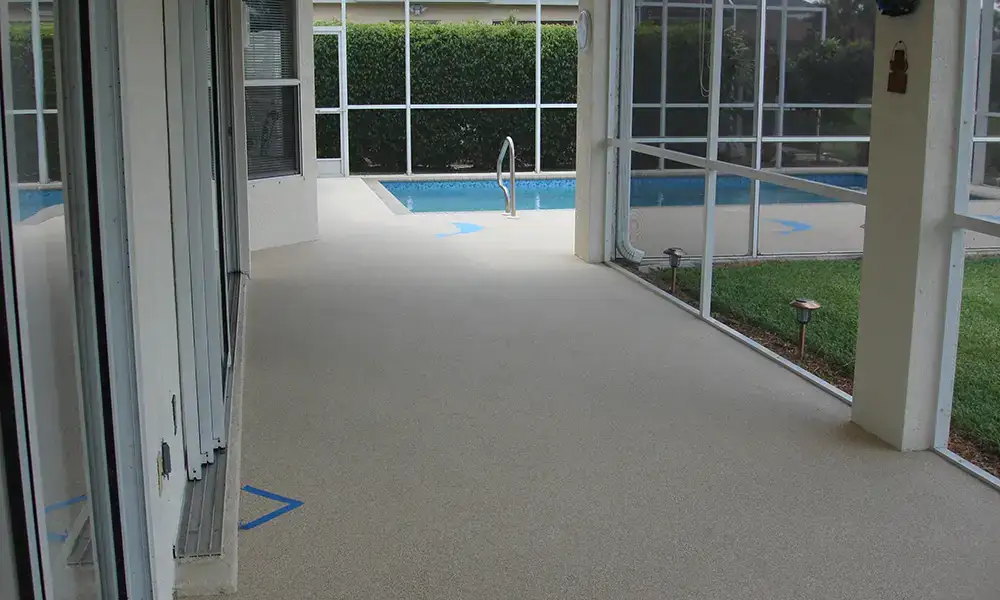
- Pool decks and surrounding walkways
- Entryways and building access paths
- Courtyards and shared outdoor gathering areas
- Clubhouse exteriors
- Pedestrian connectors between buildings
Each area may require different textures, drainage solutions, or performance characteristics—but all must meet safety expectations.
Slip Resistance and Community Safety
Slip resistance is one of the most important considerations for shared spaces. Smooth or worn surfaces become hazardous quickly, especially when wet.
High-performance HOA surfacing systems are designed to:
- Maintain traction in wet conditions
- Reduce algae and mildew buildup
- Remain comfortable underfoot while improving grip
- Meet safety expectations for barefoot and shoe traffic
Choosing the wrong surface increases fall risk and long-term liability exposure.
Drainage and Long-Term Performance
Poor drainage is a leading cause of surface failure in Florida communities. Standing water accelerates deterioration and increases slip hazards.
Effective HOA and condo surfacing systems account for:
- Proper slope and water flow
- Seamless transitions between areas
- Resistance to moisture intrusion
- Compatibility with existing substrates
Drainage must be addressed as part of the system—not treated as an afterthought.
Appearance, Consistency, and Property Value
While safety comes first, appearance still matters. HOA boards must balance durability with visual consistency across shared spaces.
Modern surfacing systems allow communities to:
- Refresh outdated or mismatched areas
- Maintain cohesive aesthetics across buildings
- Improve curb appeal without full demolition
- Extend surface life while controlling costs
Consistency reduces ongoing maintenance complexity and resident complaints.
Frequently Asked Questions
What makes HOA and condo surfacing different from residential surfacing?
HOA and condo surfaces must withstand higher foot traffic, increased moisture exposure, and stricter safety expectations compared to single-family residential areas.
Why do HOA surfaces fail faster in Florida?
Humidity, frequent rain, UV exposure, and constant use accelerate wear, algae growth, and surface breakdown.
Are slip-resistant surfaces required for HOA common areas?
While requirements vary, slip resistance is strongly recommended to reduce fall risk and liability in shared spaces.
How does drainage affect HOA surfacing performance?
Poor drainage leads to standing water, surface deterioration, and increased slip hazards, shortening the lifespan of the system.
Can HOA surfaces be resurfaced instead of replaced?
In many cases, yes—if the underlying substrate is sound. Professional evaluation determines feasibility.
How long do high-traffic surfacing systems last?
Lifespan depends on materials, installation quality, and maintenance, but high-performance systems are designed for long-term use.
Do HOA surfacing projects disrupt residents?
Professional installation minimizes disruption and is often faster than full replacement projects.
Are HOA surfacing systems customizable in appearance?
Yes. Many systems offer color and texture options while maintaining safety and performance standards.
How often should HOA surfaces be inspected?
Regular inspections help identify wear, drainage issues, or safety concerns before they become major problems.
Should HOA boards consult professionals before choosing a surfacing system?
Absolutely. Professional guidance ensures the system meets safety, durability, and long-term maintenance needs.
How Specialty Surfaces Delivers Durable HOA & Condo Surfacing for High-Traffic Areas
Specialty Surfaces has delivered high-performance surfacing solutions across Florida for more than 17 years, working with HOAs, condo associations, and property managers who need safe, durable finishes in high-use spaces such as walkways, pool decks, entry routes, and shared outdoor areas.
Our team focuses on what matters most in community environments: slip resistance, drainage performance, durability under constant foot traffic, and long-term maintenance control. The result is HOA & condo surfacing systems that hold up over time while helping boards and managers reduce safety risks and liability exposure.
Plan Durable Solutions for High-Traffic Community Areas
If your community is evaluating long-term solutions for shared spaces, our team can help assess HOA surfacing systems and condo surfacing solutions designed for safety, drainage, and heavy daily use. We also coordinate adjacent areas such as commercial pool deck surfacing, playground surfacing, and splash pad surfacing to ensure consistent performance across your property.

 We value your privacy & would never spam you.