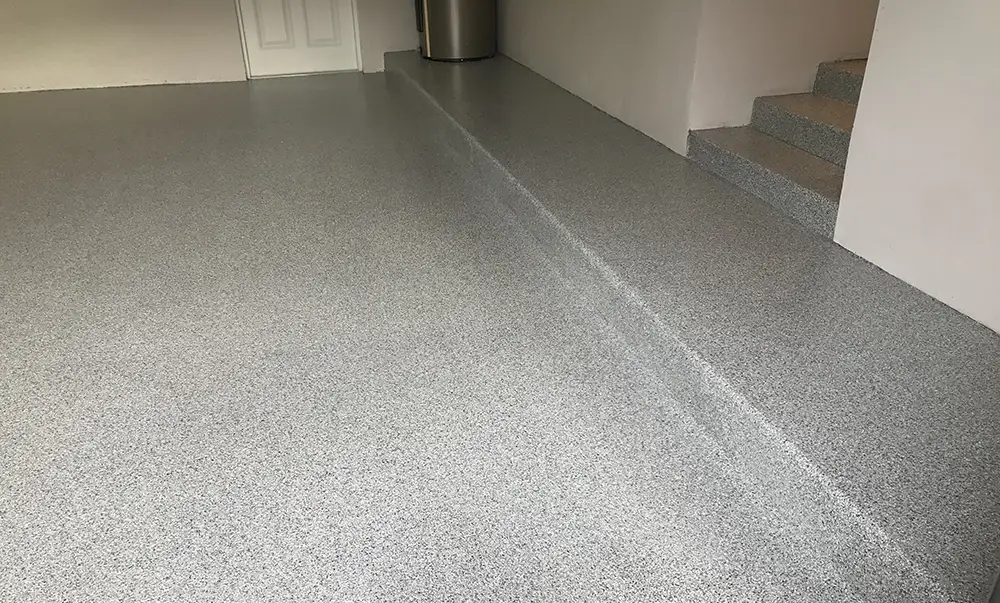
Florida garages are exposed to heat, humidity, vehicle traffic, and moisture that can quickly degrade untreated concrete. When surfaces begin to stain, crack, or deteriorate, homeowners often consider garage floor coatings as a way to improve durability and appearance.
Choosing between epoxy and resin-bound systems is not simply an aesthetic decision. It directly affects long-term performance, slip resistance, moisture tolerance, and maintenance requirements in Florida’s demanding climate.
Key Takeaways
- Not all garage floor coatings perform equally under Florida heat and humidity.
- Epoxy systems rely heavily on proper surface preparation and slab condition.
- Resin-bound systems offer enhanced durability and moisture flexibility.
- Slip resistance and long-term maintenance should guide the decision.
- Professional evaluation prevents premature coating failure.
Understanding the Purpose of Garage Floor Coatings
Concrete garage slabs are porous and vulnerable to staining, cracking, and moisture intrusion. Garage floor coatings are designed to protect the slab while improving surface durability and cleanability.
In Florida, humidity and temperature fluctuations can place additional stress on coatings. The right system must tolerate moisture vapor transmission, vehicle weight, and chemical exposure from oils and cleaners.
Epoxy Garage Floor Systems: Strengths and Limitations
Epoxy coatings are widely used because they provide a hard, glossy finish that enhances appearance and improves resistance to stains and spills. When installed correctly over a properly prepared slab, epoxy can deliver solid performance in residential settings.
However, epoxy is rigid. In climates where moisture vapor or slab movement is present, this rigidity can lead to cracking, peeling, or delamination. Surface preparation is critical, and long-term performance depends heavily on substrate condition.
Resin-Bound Systems: Performance and Flexibility
Resin-bound surfacing systems combine aggregates with advanced binding agents to create a durable, textured finish. Compared to traditional epoxy, these systems often provide improved flexibility and moisture tolerance.
For homeowners seeking garage floor coatings that perform reliably in humid environments, resin-bound systems can offer enhanced durability and traction while maintaining a consistent appearance.
Moisture, Heat, and Preparation: Why Florida Conditions Matter
Florida’s climate introduces variables that directly affect coating performance:
- High humidity and moisture vapor
- Elevated slab temperatures
- Heavy vehicle use year-round
- Occasional water intrusion during storms
Selecting the right garage floor coatings solution requires evaluating slab condition, drainage, and long-term exposure risks—not just surface appearance.
When Professional Assessment Is Critical
Before choosing a coating system, a professional inspection helps determine:
- Slab integrity
- Moisture levels
- Existing coating failures
- Surface preparation needs
This evaluation prevents short-term fixes that may fail prematurely under Florida conditions.
Frequently Asked Questions
What are garage floor coatings designed to do?
Garage floor coatings protect concrete from staining, cracking, and moisture intrusion while improving durability and appearance.
Is epoxy suitable for Florida garages?
Epoxy can perform well when properly installed, but moisture conditions must be evaluated carefully.
Are resin-bound systems better than epoxy?
Each system has advantages. Resin-bound systems often offer improved flexibility and moisture tolerance.
How long do garage coatings last?
Lifespan varies by system and installation quality, but professionally installed systems can last many years.
Can coatings improve slip resistance?
Yes. Textured finishes can enhance traction compared to bare concrete.
Does surface preparation matter?
Proper preparation is critical to ensure adhesion and prevent premature failure.
Can coatings be applied over damaged slabs?
Minor cosmetic issues may be addressed, but structural problems must be corrected first.
Are garage coatings resistant to chemicals?
Many systems resist oil and common automotive fluids.
Do coatings require maintenance?
Routine cleaning and periodic inspection help extend lifespan.
Should homeowners consult a specialist before choosing a system?
Yes. Professional evaluation ensures the chosen system matches slab conditions and environmental exposure.
Why Florida Homeowners Choose Specialty Surfaces for Garage Floor Coatings
With more than 17 years of experience, Specialty Surfaces helps homeowners evaluate slab condition, moisture exposure, and long-term durability needs before recommending garage floor coatings solutions. Our Florida-specific expertise ensures that safety, performance, and longevity are prioritized over short-term cosmetic upgrades.
Homeowners comparing epoxy and resin-bound options can explore our epoxy and resin-bound garage surfacing systems to understand long-term durability and moisture performance. For broader surface upgrades, review our Florida residential surfacing solutions for driveways and garages and compare specifications across our high-performance concrete resurfacing materials.
Don’t wait for peeling, cracking, or moisture damage to worsen. Request a quote today to receive a professional evaluation and a clear recommendation for garage floor coatings that are designed to perform in Florida conditions.