Playgrounds and splash pads are designed for fun—but behind the scenes, they must meet strict safety, accessibility, and drainage requirements. For municipalities, HOAs, schools, and commercial property owners, choosing the right surfacing system is not optional. It directly impacts user safety, ADA compliance, long-term maintenance, and liability exposure. When selecting playground splash pad surfacing, decision-makers must account for constant water exposure, slip resistance, ADA accessibility, and long-term durability in high-use public environments.
This guide explains what matters most when selecting playground and splash pad surfacing, how different systems perform, and why proper design and installation are critical in Florida environments.
Key Takeaways
- Playground and splash pad surfacing must balance fall protection, slip resistance, and accessibility.
- ADA compliance requires surfaces that remain firm, stable, and navigable over time.
Drainage is essential to prevent standing water, slip hazards, and surface failure. - Public-use surfacing systems must withstand constant moisture and heavy foot traffic.
- Improper material selection or installation increases safety risks and long-term liability.
Why Playground & Splash Pad Surfacing Is Different
Unlike decorative outdoor surfaces, playgrounds and splash pads must perform under constant stress:
- Barefoot traffic and running children
- Continuous water exposure
- High-impact fall zones
- ADA accessibility requirements
- Drainage and slip resistance
Surfaces that look good but fail to manage impact, traction, or water can quickly become safety hazards.
Key Safety Requirements for Playgrounds
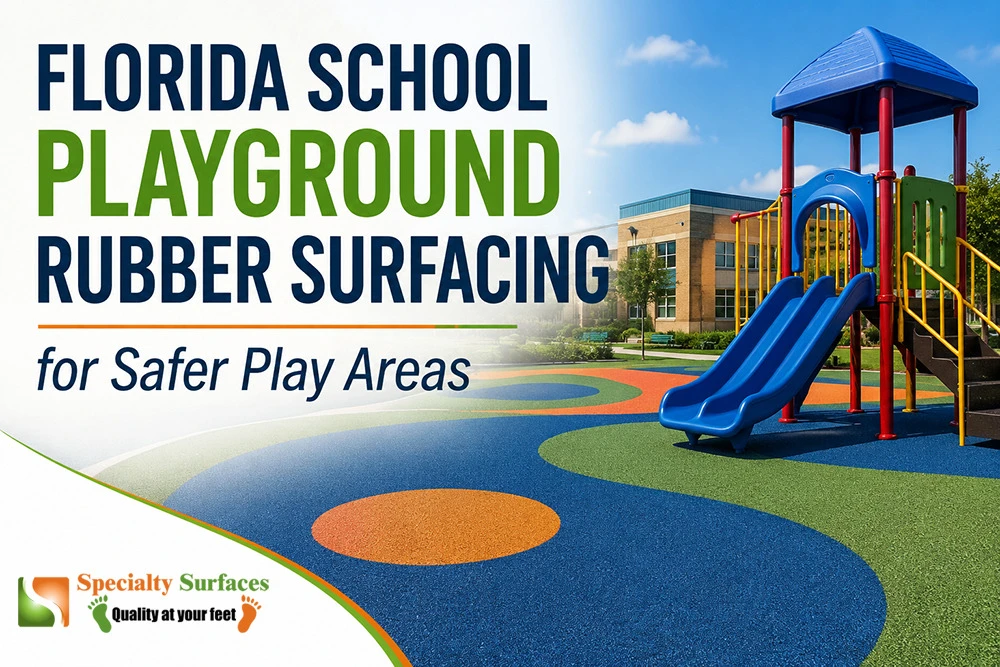
Playground surfacing must be designed to reduce injury risk from falls, particularly around climbing structures, slides, and swings. Proper playground splash pad surfacing must balance impact attenuation, slip resistance, and effective drainage to meet safety and accessibility standards in public-use environments.
Important considerations include:
- Impact attenuation to help absorb falls
- Seamless installation to eliminate trip hazards
- Non-slip performance in wet conditions
- Long-term consistency (no shifting or displacement)
Poured-in-place systems are commonly specified because they provide uniform protection across play zones.
ADA Accessibility: What Compliance Really Means
ADA compliance is more than just access—it’s usability.
For playgrounds and splash pads, compliant surfacing must:
- Allow smooth wheelchair movement
- Remain stable and firm under load
- Avoid loose-fill materials that shift or compress
- Maintain accessibility over time, not just at installation
Improper materials or poor installation can result in surfaces that technically pass inspection but fail in real-world use.
Drainage: The Most Overlooked Requirement
In Florida, drainage is just as important as safety.
Without proper drainage:
- Water pools on the surface
- Slip risk increases
- Algae and mildew develop
- Subsurface damage shortens lifespan
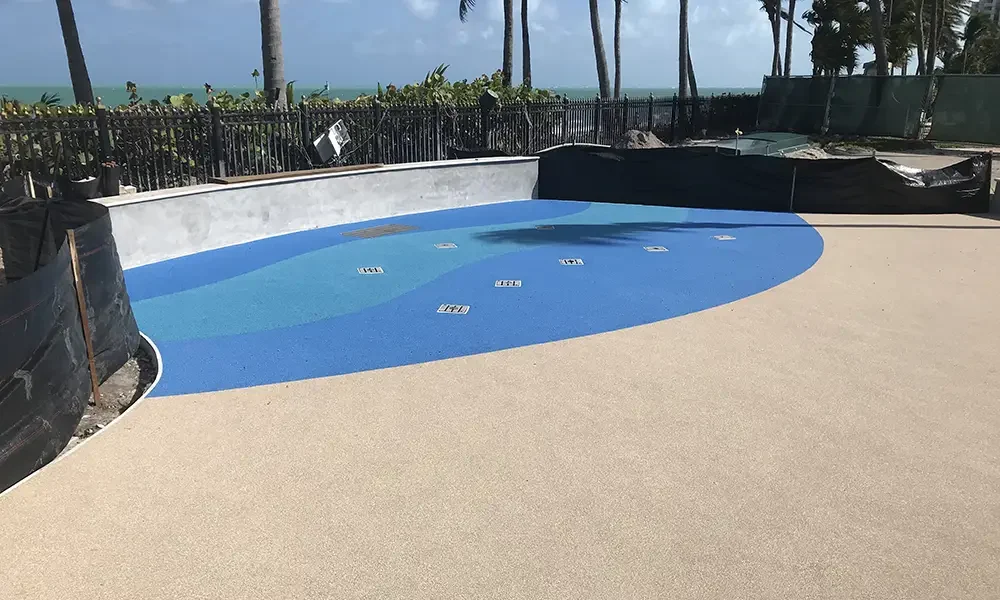
A well-designed system integrates porosity, slope, and base preparation to move water away efficiently—especially critical for splash pads with continuous water flow.
Best Surfacing Systems for Playgrounds & Splash Pads
Poured-in-Place Rubber Surfacing
This is one of the most trusted systems for public play environments.
Benefits include:
- Excellent slip resistance when wet
- Impact attenuation for fall protection
- Seamless, ADA-compliant surface
- Designed drainage when installed correctly
- Long service life with minimal maintenance
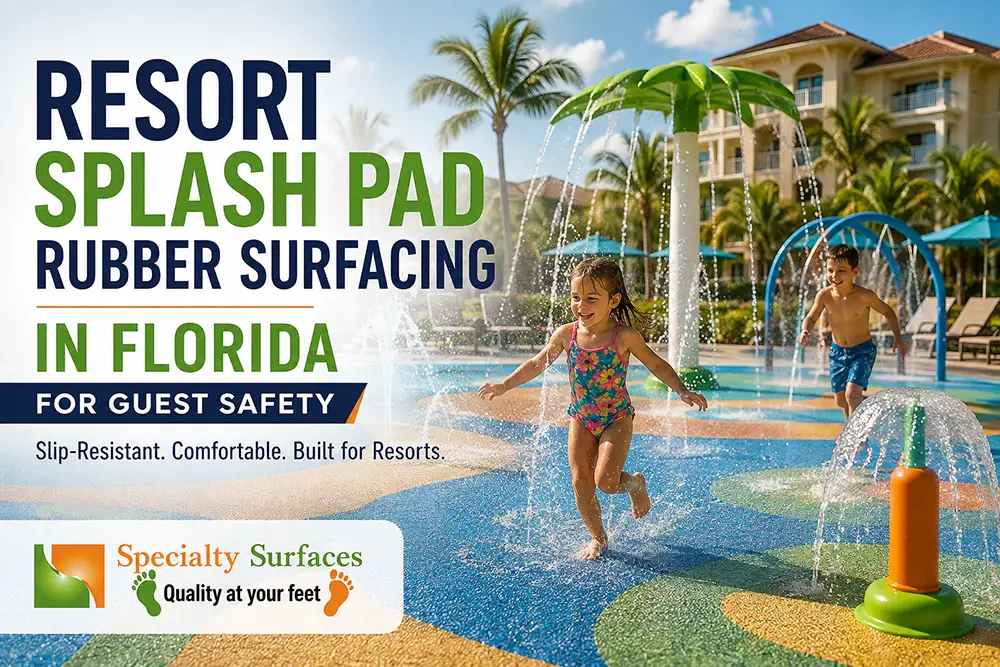
These systems are commonly used in municipal parks, school playgrounds, and commercial splash pads.
Why Professional Installation Matters
Even high-quality materials can fail without proper installation. Sub-base preparation, thickness calibration, slope design, and curing all affect performance.
Professional installers understand:
- Florida soil and moisture conditions
- Code and inspection requirements
- How to balance safety, accessibility, and drainage
This reduces risk and ensures long-term compliance.
Frequently Asked Questions
What type of surfacing is safest for playgrounds and splash pads?
Surfaces designed for impact attenuation and slip resistance, such as poured-in-place rubber systems, are widely used because they help reduce fall injuries while maintaining traction in wet conditions.
Why is ADA compliance important for playground and splash pad surfacing?
ADA-compliant surfacing ensures accessibility for individuals using wheelchairs or mobility devices and helps public and commercial facilities meet legal accessibility requirements.
What does ADA-compliant playground surfacing require?
The surface must be firm, stable, slip-resistant, and allow smooth wheelchair movement without shifting, ruts, or loose materials over time.
How does drainage affect playground and splash pad safety?
Proper drainage prevents standing water, reduces slip hazards, limits algae growth, and protects the sub-base from long-term damage—especially critical for splash pads with constant water flow.
Are poured-in-place rubber surfaces suitable for splash pads?
Yes. When designed correctly, poured-in-place rubber systems provide slip resistance, seamless transitions, and effective drainage, making them a common choice for splash pad environments.
How does playground surfacing help with fall protection?
Impact-attenuating surfaces absorb energy during falls, helping reduce the risk of serious injuries compared to hard or improperly designed surfaces.
What are the most common mistakes in playground or splash pad surfacing projects?
Common issues include poor drainage design, inadequate base preparation, non-compliant materials, and improper installation that leads to premature failure or safety risks.
How long does commercial playground or splash pad surfacing last?
Lifespan depends on materials, installation quality, and maintenance. High-quality systems designed for public use can perform well for many years when properly maintained.
Do playground and splash pad surfaces require ongoing maintenance?
Yes. Regular inspections, cleaning, and minor repairs help maintain safety, drainage performance, and compliance over time.
Should playground and splash pad surfacing be evaluated by professionals?
Absolutely. Professional evaluation ensures the surface meets safety standards, ADA requirements, and drainage needs specific to the site and intended use.
Proven Surfacing Solutions for Commercial and Public Environments
With more than 17 years of experience installing playground splash pad surfacing systems across Florida, Specialty Surfaces helps HOAs, municipalities, schools, resorts, and commercial property owners meet safety, accessibility, and durability requirements with confidence. Our experience includes safety-critical environments where fall protection, ADA accessibility, and drainage performance are non-negotiable.
We specialize in poured-in-place rubber and water-play surfacing systems designed to perform under constant moisture, heavy foot traffic, and regulatory oversight. From playgrounds and splash pads to multi-use community spaces, our team focuses on code compliance, long-term durability, and risk reduction—not shortcuts that lead to maintenance or liability issues later.
Plan a Safe, Compliant Play Surface
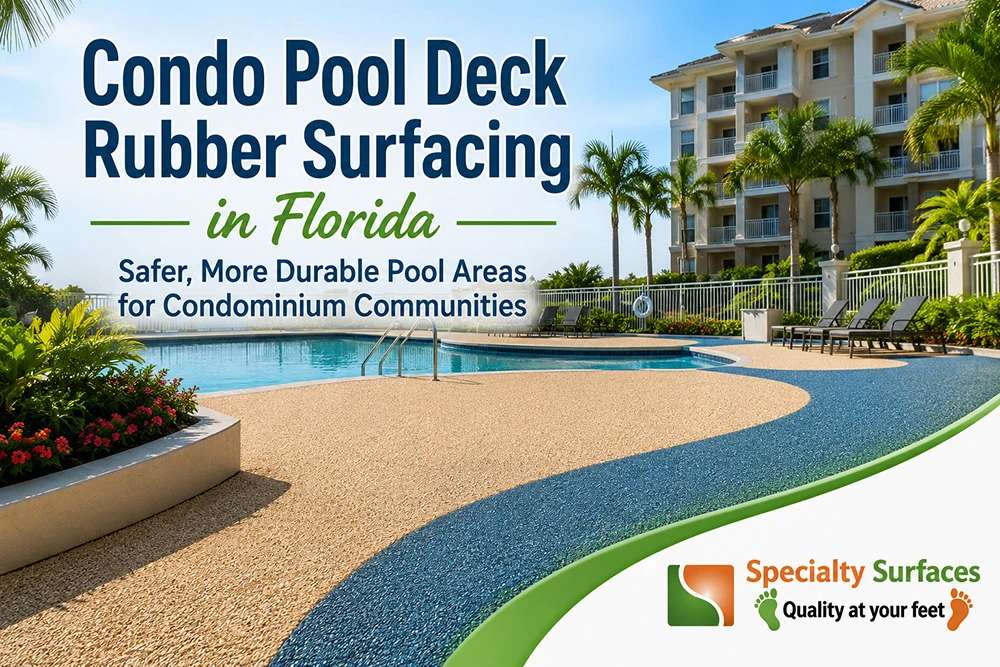
Talk with our team about playground surfacing solutions and splash pad surfacing systems designed to meet safety standards, ADA requirements, and drainage needs for public and commercial environments. We also work with HOA surfacing and condo surfacing projects across Florida.